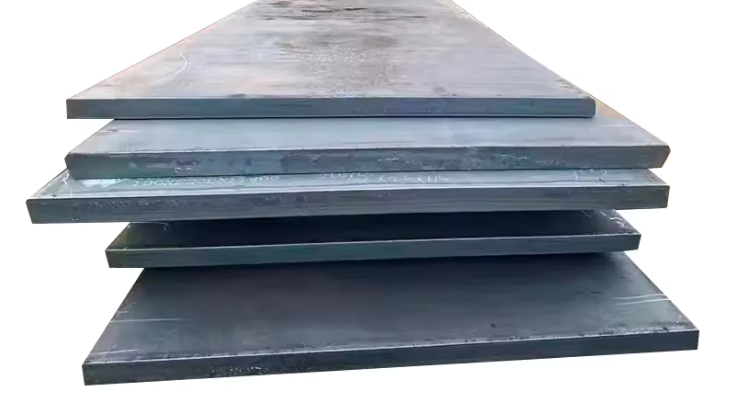
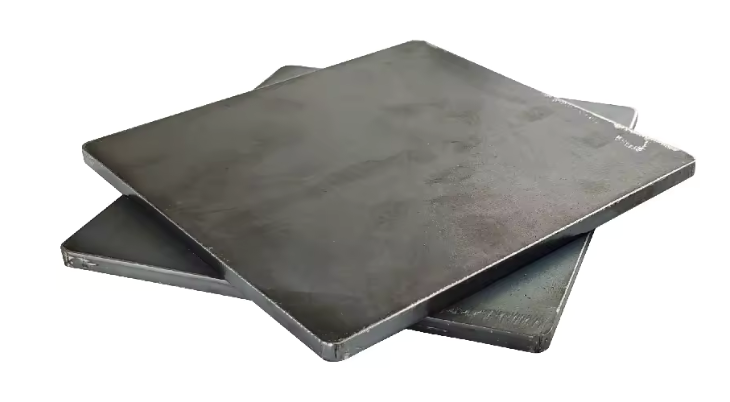
Choudhary Metal is a leading Supplier and Exporter of Military, Armor & Ballistic Steel
Plates in Mumbai, India. We offer a wide range of high-performance armor plates
including Armor 500 Plates, Armor 500T Plates, MIL A 46100 Plates, and MIL A12560 Plates.
These plates are specially designed for applications that require superior protection, high
strength, and impact resistance.
Our Ballistic Steel Plates are manufactured to meet strict military and defense
specifications, making them ideal for combat vehicles, armored vehicles, defense structures,
and security applications. With exceptional hardness and durability, these plates
provide reliable protection against ballistic threats and heavy impact.
Features
Designed to be used as a front or back plate
Maintenance Free
Compact design
Hot rolled metal plates, sheets and coils
Armor made of Ruukki steel
Customers are searching for extremely good protection & protection performance for his or her
cease-merchandise. Armor plate has admirable ballistic belongings in combination with high
stiffness & strength. Armor is developed for programs, wherein blast protection or high
ballistic resistance is required.
Application
Designed to be used as a front or back plate
Maintenance Free
Compact design
Hot rolled metal plates, sheets and coils
Armor made of Ruukki steel
Customers are searching for extremely good protection & protection performance for his or her
cease-merchandise. Armor plate has admirable ballistic belongings in combination with high
stiffness & strength. Armor is developed for programs, wherein blast protection or high
ballistic resistance is required.
Description of the steel grades
Armor steels Plates are made with a novel direct quenching process. With this method not only a
good blast and ballistic protection is attained, but also excellent flatness, surface quality
and dimensional accuracy are getting.
Armor 400 steel is made to give defense against high anxiety caused by detonations and blasts.
Armor 500 is the most appropriate choice, when protection is desired against kinetic energy
projectiles i.e. ballistic presentation.
The number of the designation indicate the average Brinell hardness value 400 and 500 HBW,
correspondingly.
Product forms
Heavy plates and cut lengths (=sheets).
Delivery condition
Quenched
Dimensions
Heavy plates 6.0 – 30 mm.
Cut lengths with mill edges 2.5 – 6.5 mm.
Tolerances Heavy plates
Thickness, Table 1.
Width and length EN 10029.
Flatness EN 10029 class N, steel type H.
Cut lengths
Thickness, Table 1.
Width and length EN 10051.
Flatness EN 10029 class N, steel type H.
Tolerances Heavy platesSurface condition
According to EN 10 163-2 Class B Subclass 3.
Repair welding of plates is not permitted in plate produc- tion of Armor steels.
General technical delivery condition
According to EN 10 021. Unless otherwise agreed,
inspection document EN 10 204-2.2 is issued in English.
Chemical composition
The chemical composition is stated in Table 2.
Mechanical properties
Typical mechanical properties are presented in Table 3.
The plate must take suitable safety measures to protect themselves and no outsiders must be
permissible in the area. The safest location is usually by the winding machine. The handling
instructions of the steel supplier and safety instructions of the workshop must be adhered to in
detail. New employees must receive appropriate training before they are allowed to process hardened
steels.
Materials testing
Materials testing procedure is presented in Table 4.
Suggested minimum plate width of Armor 500 for different guard classes is presented in Table
5.
Heat treatment
Heat treatment is not recommended. If tempering procedure is needed, satisfy, contact technical
customer service for further assistance.
Welding
Armor steels can be welded with common welding methods. Austenitic steel welding consumables are
recommended. Ferritic welding consumables can be used also, if the strength of the joint is
important. If ferritic consumables are used, the need for elevated working temperature has to be
studied in order to achieve fault- less weld joint.
Bending
When cold forming Armor 500 steels by bending, the minimum bending radius of the upper tool has to
be 8 times the thickness of the material. The corresponding bending radius for Armor 400 has to be 5
times the thickness of the material. Special care has to be taken to the working safety, when these
steels are cold formed. Mechanical cutting is not suitable as an edge preparation process for bended
parts.
Cutting
Armor steels are well suitable for laser and plasma cut- ting. Mechanical cutting can also be used,
if the cutting shears/blades are hard enough and the equipment used is rigid. However, water jet
cutting is preferred, because with this method the ballistic properties of the cut edge can be
obtained.
Machining
Armor steels can be machined using rigid hard metal tools and rigid equipment. Sufficient
lubrication has to be provided and special concentration has to be paid to securing of work piece.
The cutting parameters should be chosen in the way that the vibration of the cutting tool and the
work piece can be avoided, because vibration decreases the lifetime of the cutting tool
considerably.
Occupational safety
Special care must be taken in all stages of treatment of hardened steels. Flanging is taxing due to
the high strength and high flexural anxiety of the plate. If the bending radius, for example, is too
small and a crack is created in the bending point, the plate may fly from the bending tool in the
direction of the bend.
| Heavy plates Thickness mm |
Upper tolerance mm |
Sheets Thickness mm |
Upper tolerance, width-wise mm |
| -1200 |
1201 – 1500 |
| 6.00 – 6.99 |
0.74 |
2.50 – 3.00 |
0.3 |
0.32 |
| 7.00 – 7.99 |
0.76 |
3.01 – 4.00 |
0.32 |
0.36 |
| 8.00 – 9.99 |
0.8 |
4.01 – 5.00 |
0.36 |
0.4 |
| 10.00 – 11.99 |
0.9 |
5.01 – 6.00 |
0.4 |
0.42 |
| 12.00 – 14.99 |
1 |
6.01 – 6.50 |
0.44 |
0.44 |
| 15.00 – 19.99 |
1.1 |
|
|
|
| 20.00 – 24.99 |
1.2 |
|
|
|
| 25.00 – 29.99 |
1.3 |
|
|
|
| 30 |
1.4 |
|
|
|
Chemical Composition
| |
C |
Si |
Mn |
P |
S |
Cr |
Ni |
Mo |
B |
| Armor 400 |
0.24 |
0.7 |
1.5 |
0.02 |
0.02 |
1 |
1 |
0.7 |
0.01 |
| Armor 500 |
0.32 |
0.7 |
1.5 |
0.02 |
0.02 |
1 |
2 |
0.7 |
0.01 |
Mechanical properties, typical
| |
R MPa |
R MPa |
A % |
HB t °C Cha |
|
|
| Armor 400 |
1100 |
1300 |
8 |
360 – 450 |
-40 |
20 |
| Armor 500 |
1450 |
1700 |
7 |
480 – 560 |
-40 |
20 |